
Localizing a Short-Form Drama Series: Translation Is Only the First Deliverable
Short-form drama localization is not a one-file translation task: names, relationships, subtitle readability, episode-to-episode consistency, and final delivery all have to work across the full series.
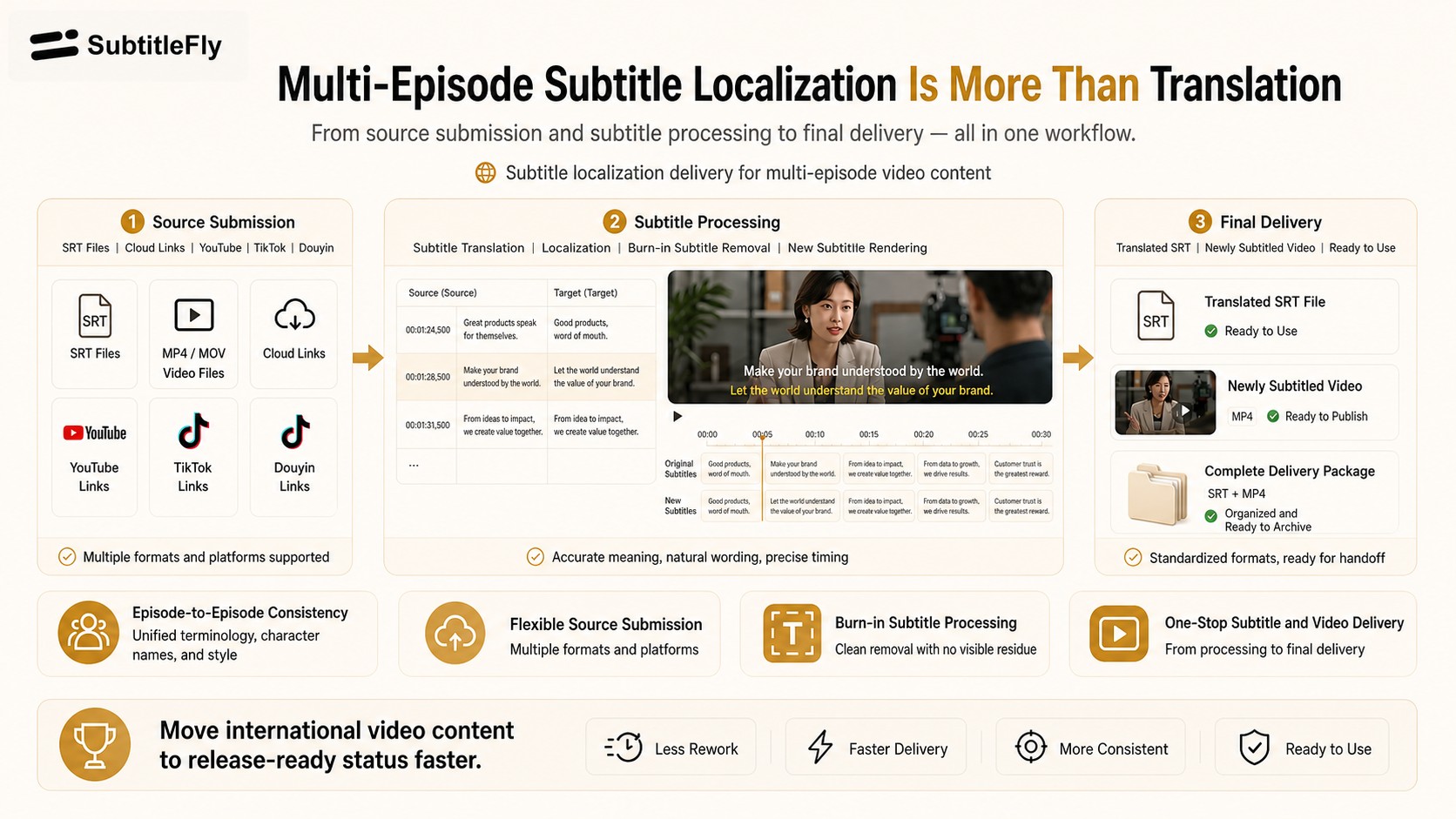
The real challenge is keeping every episode consistent, readable, and ready for release.
Translating one episode is a manageable task. Localizing an entire short-form drama series is an operations problem.
A first-pass translation may arrive quickly. But before the series can go live, someone still has to check whether character names remain consistent, whether relationship-driven titles make sense in the target language, whether viewers can read each subtitle in time, and whether the final files match the latest video versions.
With dozens of episodes moving through a release schedule, small inconsistencies stop being isolated language issues. They become production delays.
The question is no longer simply, “Can these subtitles be translated?” It is:
Can the whole series be localized to one standard and delivered in a form the distribution team can actually use?
Episode-by-episode translation creates series-wide problems
Short-form dramas repeat the same characters, relationships, locations, companies, and plot devices across many files. A translation choice made in episode one may still matter in episode forty.
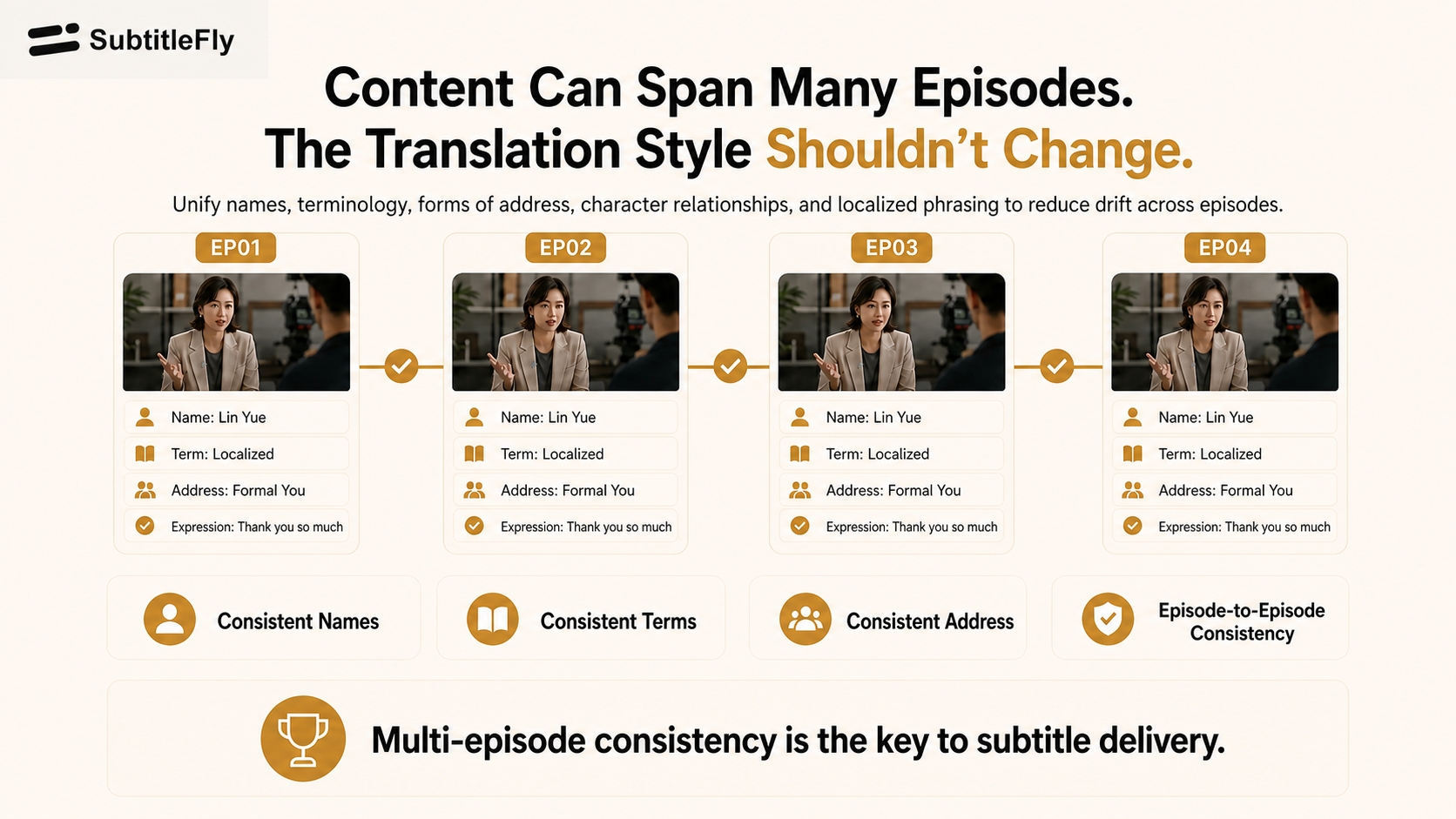
This becomes especially important when the source language uses titles and forms of address to signal relationships. The same character may be addressed by a formal title at work, a family title at home, and a nickname among friends. Translating each expression without the wider story can make one person appear to be several different characters—or erase the relationship shift the scene is meant to show.
The answer is not to force every reference into one identical term. Consistency means preserving the same underlying character and story facts while allowing the wording to fit the scene.
That requires project-level context:
• Characters: confirmed names and relationships
• Recurring references: terms, locations, and organizations
• Forms of address: who uses them and in which situations
• Earlier decisions: localization choices established in previous episodes
• Story changes: developments introduced later in the series
Without that shared context, every new episode starts from zero. The translation may be correct in isolation while the series becomes harder to follow as it progresses.
Subtitles have to work at viewing speed
Subtitle text is not read like an article or script. Viewers are processing dialogue, performance, visuals, and editing at the same time.
A line can be accurate and still fail on screen because it is too long for its display time. A poorly placed line break can separate words that belong together. A literal translation can turn a sharp insult into a formal explanation, weakening both the performance and the pace of the scene.
This is why subtitle quality cannot be judged from a text file alone. The localization needs to account for:
• Reading time: how much text appears within the available time
• Line breaks: where a sentence is divided across lines
• Tone: whether emotional intent survives compression
• Fast scenes: whether the subtitle remains clear during rapid cuts
• Character fit: whether the wording suits the speaker and scene
For a series, these checks must remain repeatable. Viewers should not feel that the subtitle style changes every time a new episode begins.
The last mile includes files, versions, and release-ready output
Even approved text can create delays if the production handoff is unclear.
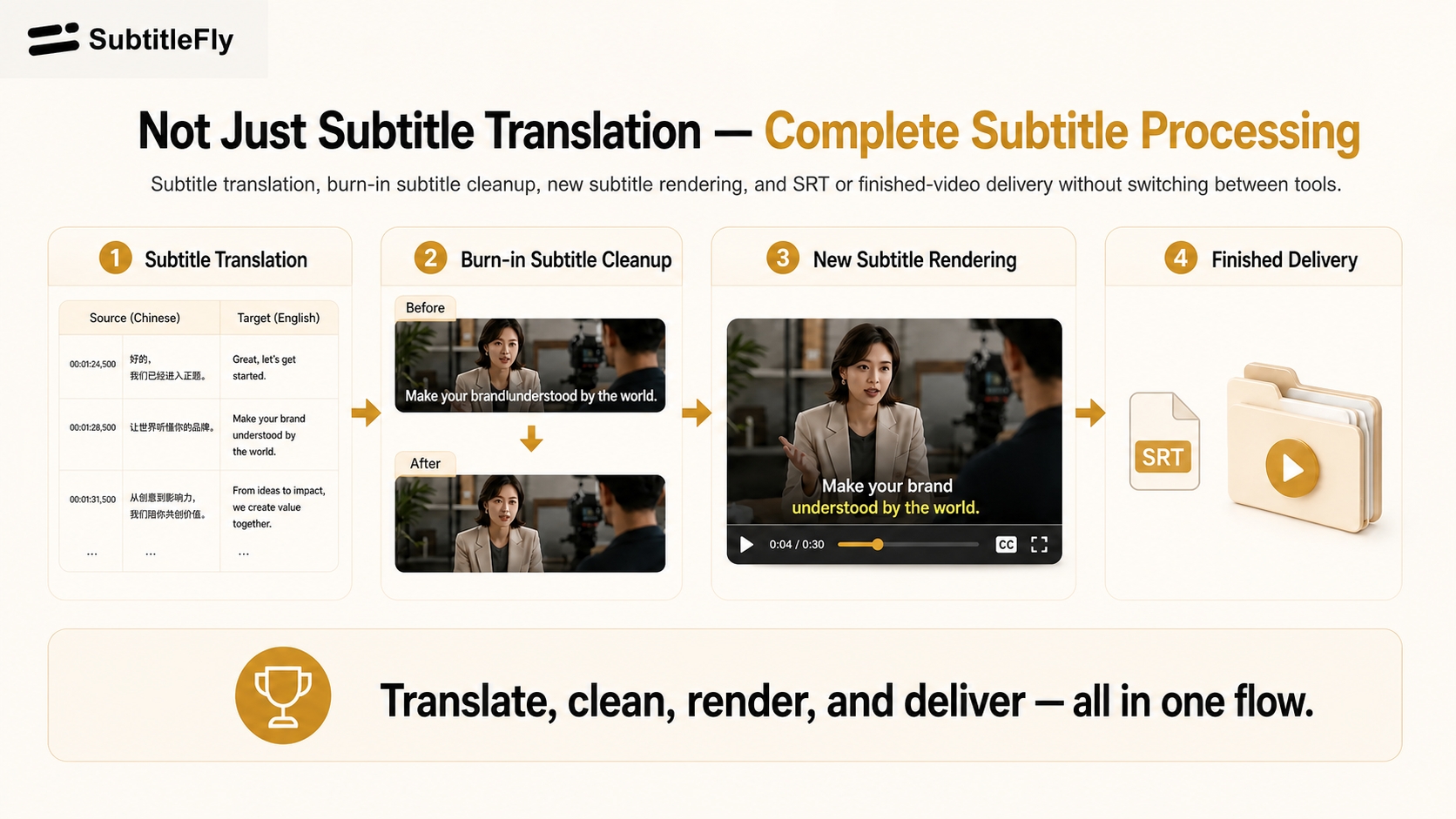
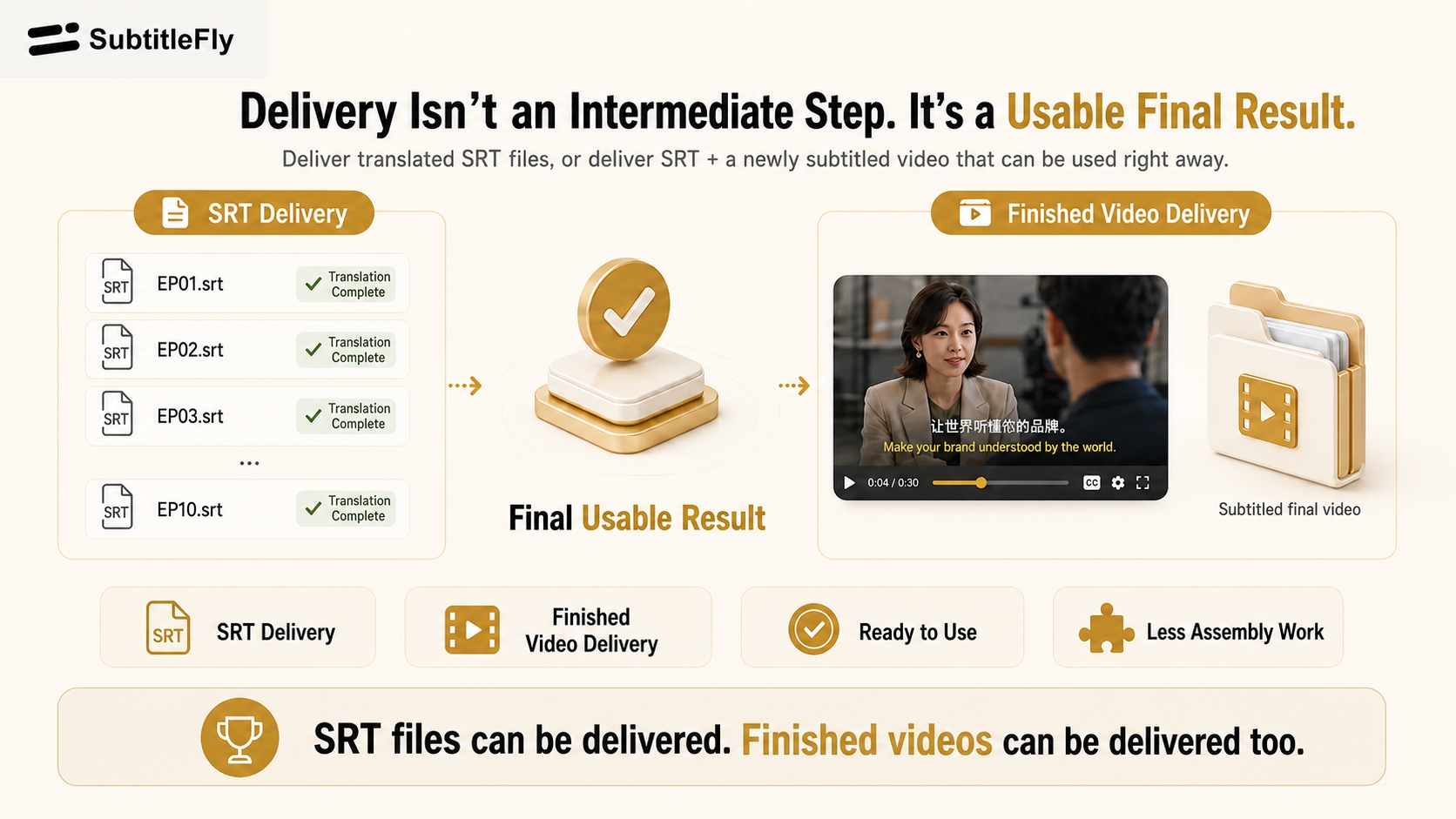
One team may need translated SRT files to finish editing internally. Another may need videos with the localized subtitles already included. A source video may contain existing hardcoded subtitles that affect layout. Late script or picture changes may require the subtitle and video versions to be matched again.
When these decisions are handled episode by episode, file naming, formats, revisions, and ownership can change throughout the project. The localization team finishes the text, but the distribution team inherits another round of coordination.
A scalable workflow defines the input, processing scope, and final deliverable for the series. It keeps approved language decisions available to later episodes and makes revisions easier to trace to the correct files.
For teams working against a release calendar, this operational consistency matters as much as translation quality. The deliverable has to arrive in the right form, not merely contain the right words.
SubtitleFly manages subtitle localization as a series-level project
SubtitleFly supports teams localizing multi-episode dramas, serialized video content, courses, and other recurring video formats.
Projects can begin with existing SRT files or video materials. Based on the confirmed scope, SubtitleFly handles subtitle translation and localization in context, checks on-screen readability, and maintains project-level references for character names, terminology, and recurring expressions.
The final delivery can be organized around the team’s actual production needs. Where subtitle files are required, translated SRT files can be delivered. Where video materials are provided and subtitled output is included in the agreed scope, the project can also deliver videos with the new subtitles.
The value is not simply faster first-pass translation. It is a workflow designed to keep later episodes aligned with decisions already made—and to give the client files that can move into the next production or release stage.
Learn more about SubtitleFly
Visit the website: https://subtitlefly.com/
Submit your subtitle localization project: https://subtitlefly.com/contact/